

In subrogation cases where the insured’s damages were caused by a defective product, the fact that the Consumer Product Safety Commission (CPSC) issued a warning about the product at issue may help to establish that the product was defective when it left the manufacturer’s possession and control. On September 5, 2024, the CPSC issued a warning urging consumers to “immediately stop using SafPow SPC-42020 and AMPOWSURE ASP-C10S42020 battery chargers because they pose a risk of serious injury and death.” According the CPSC, “[u]sing these chargers with an incompatible ... Continue Reading

In Lithko Contr., LLC v. XL Ins. Am. Inc., No. 31, Sept. Term, 2023, 2024 Md. LEXIS 256, the Supreme Court of Maryland considered whether a tenant who contracted for the construction of a large warehouse facility waived its insurer’s rights to subrogation against subcontractors when it agreed to waive subrogation against the general contractor. The court ultimately decided that the unambiguous language of the subrogation waiver in the development agreement between the parties did not extend to subcontractors. The court also held that the tenant’s requirement that subcontracts include a subrogation waiver did not, in this case, impose a project-wide waiver on all parties. The court, however, found that the requirement that the subcontracts include a similar, but not identical, waiver provision rendered the subcontract’s waiver clauses ambiguous and remanded the case to the lower court to determine if the parties to the development agreement – i.e., Duke Baltimore LLC (“Duke”) and Amazon.com.dedc, LLC (“Amazon”) – intended that the waiver clause in the subcontracts covered claims against subcontractors.Continue Reading

In subrogation cases where the insured’s damages were caused by a defective product, the fact that the product at issue is or was subject to a recall announced by the Consumer Product Safety Commission (CPSC) may help to establish that the product was defective when it left the manufacturer’s possession and control. On August 22, 2024 and August 29, 2024, the CPSC announced the following recalls related to products that present fire hazards:

In subrogation cases where the insured’s damages were caused by a defective product, the fact that the product at issue is or was subject to a recall announced by the Consumer Product Safety Commission (CPSC) may help to establish that the product was defective when it left the manufacturer’s possession and control. On August 15, 2024, the CPSC announced the following recalls related to products that present fire hazards:
- Trader Joe's Company Recalls Mango Tangerine Scented Candles Due to Fire Hazard. According to the CPSC’s website, “[t]he candle flame can spread from the ...

In L’Oreal USA, Inc. v. Burroughs, 372 Ga. App. 30, 2024 Ga. App. LEXIS 250, the Court of Appeals of Georgia (Appellate Court) considered whether Georgia’s ten-year statute of repose for products liability precluded strict liability and/or negligence claims where the product, allegedly causing injury, was first purchased more than 10 years ago, but new containers of the same product were purchased within the last 10 years. The Appellate Court found that the “first sale” triggers the products liability statute of repose.
In Burroughs, Kiara Burroughs (Burroughs) alleged that she continuously used chemical hair relaxers from the age of six to twenty-five. In 2018, Burroughs was diagnosed with uterine fibroids, which caused her significant health problems. In October 2022, a scientific health study was released finding an association between chemical hair relaxers and uterine cancers. On October 27, 2022, Burroughs filed her original complaint, including claims for strict liability, negligence, and failure-to warn against L’Oreal USA, Inc. and others (collectively, Defendants). Defendants filed a Motion to Dismiss based, in part, on the statute of repose.Continue Reading
In subrogation cases where the insured’s damages were caused by a defective product, the fact that the product at issue is or was subject to a recall announced by the Consumer Product Safety Commission (CPSC) may help to establish that the product was defective when it left the manufacturer’s possession and control. On August 8, 2024, the CPSC announced the following recall related to a product that presents a fire hazard:
Samsung Recalls Slide-In Electric Ranges Due to Fire Hazard.
According to the CPSC’s website, “[f]ront-mounted knobs on the ranges can be activated by ... Continue Reading
In subrogation cases where the insured’s damages were caused by a defective product, the fact that the product at issue is or was subject to a recall announced by the Consumer Product Safety Commission (CPSC) may help to establish that the product was defective when it left the manufacturer’s possession and control. On August 1, 2024, the CPSC announced the following recalls related to products that present fire hazards:
In subrogation cases where the insured’s damages were caused by a defective product, the fact that the product at issue is or was subject to a recall announced by the Consumer Product Safety Commission (CPSC) may help to establish that the product was defective when it left the manufacturer’s possession and control. On July 25, 2024, the CPSC announced the following recalls related to products that present fire hazards:
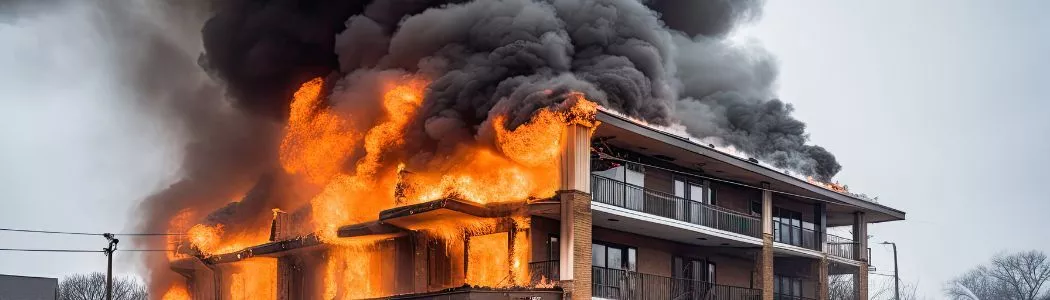
In Phila. Indem. Ins. Co. v. Gonzalez, No. 1-23-0833, 2024 Ill. App. Unpub. LEXIS 1372, the Appellate Court of Illinois considered whether the terms of a lease agreement limited a tenant’s liability for fire damages, a fire caused by her negligence, to her apartment unit only. The plaintiff insured the subject apartment building, which incurred damage to several units as result of a fire in the tenant’s unit. The lease defined “Premises” as the specific apartment unit occupied by the tenant and held the tenant responsible for damage caused to the Premises. While the court found that the lease permitted the plaintiff to subrogate against the tenant, it held that the lease terms limited the damages to the tenant’s apartment unit only.
In Gonzalez, the plaintiff’s insured owned a multi-unit apartment building in Chicago. In September 2019, the building owner entered into a lease agreement with the defendant for apartment Unit 601. The lease stated that Unit 601 was the “Leased Address (Premises).” Another provision stated that building owner “hereby leases to Tenant(s) and Tenant(s) hereby leases from Landlord(s) for use as a private dwelling only, the Premises, together with the fixtures and appliances (if any) in the premises…” The lease also stated that “Tenant shall be liable for any damage done to the premises as a result of Tenant’s or Tenant’s invitees, guests or others authorized to reside in the Premises [sic] direct action, negligence, or failure to inform Landlord of repairs necessary to prevent damage to the Premises.”Continue Reading

Working with an expert to support a product defect theory of liability is hard enough as it is. However, when the standard for strict liability is considered, properly supporting such a theory is even harder. A commonly overlooked aspect of products liability is knowing the specific state standard that needs to be met and preparing for such a standard with your expert. Upon review of a certified question from a federal appeals court, the Supreme Court of Appeals of West Virginia (Supreme Court of WV) recently addressed its standard for strict products liability.
In Judith A. Shears and Gary F. Shears, Jr. v. Ethicon, Inc., No. 23-192, 2024 W.Va. LEXIS 272, petitioners Judith and Gary Shears (the Shears) were several of more than 28,000 plaintiffs to file cases against respondent Ethicon, Inc. (Ethicon) alleging damages from the use of its Tension-Free Vaginal Tape. The Shears filed suit in the United States District Court for the Southern District of West Virginia (District Court), asserting claims that included strict liability based on a defective product design. Ethicon challenged the court’s consolidation of the case with others similarly situated, arguing that the Shears did not offer an alternative design that would have materially reduced the plaintiff’s injuries.Continue Reading
Recent Posts
Categories
- Products Liability
- Subrogation
- Experts – Daubert
- Construction Defects
- Experts - Reliability
- Contracts
- New Jersey
- CPSC Recalls
- Evidence
- Litigation
- Statute of Limitations-Repose
- Damages
- Texas
- AIA Contracts
- Economic Loss Rule
- Negligence
- Arbitration
- Indiana
- New York
- Illinois
- Idaho
- Damages-Personal Property
- Louisiana
- Limitation of Liability
- Massachusetts
- Anti-Subrogation Rule
- Landlord-Tenant
- Sutton Doctrine
- Certificate of Merit
- Waiver of Subrogation
- California
- Uncategorized
- Colorado
- Jurisdiction
- Virginia
- Maryland
- Pennsylvania
- South Carolina
- Florida
- Indemnification
- Causation
- Condemnation
- CPSC Warning
- Minnesota
- Cargo - Transportation
- Malpractice
- Rhode Island
- Spoliation
- Tennessee
- Michigan
- Comparative-Contributory Negligence
- Contribution-Apportionment
- Product Liability
- Assignment
- Missouri
- Parties
- Public Policy
- Civil Procedure
- Res Judicata
- Damages – Personal Property
- West Virginia
- Wyoming
- Oklahoma
- Builder's Risk
- Contractual Subrogation
- Equitable Subrogation
- Georgia
- Insurable Interest
- Mississippi
- Made Whole
- Delaware
- Settlement
- Subrogation – Equitable
- Construction
- Premises Liability
- Joint or Several Liability
- Montana
- Duty
- Privity
- New Mexico
- Right to Repair Act
- Landlord
- Tenant
- Building Code
- Arizona
Tags
- Products Liability
- Subrogation
- Construction Defects
- Experts
- Experts – Daubert
- New Jersey
- Waiver of Subrogation
- Construction Contracts
- Contracts
- Texas
- Daubert
- Failure to Warn
- Product Liability
- Evidence
- Damages
- Louisiana
- Economic Loss Doctrine
- Indiana
- Experts - Reliability
- Illinois
- Arbitration
- Negligence
- Statute of Repose
- Statute of Limitations
- AIA Contract
- Idaho
- Loss of Use
- Vehicles
- New York
- Litigation
- Spoliation
- Landlord-Tenant
- Limitation of Liability
- Damages-Vehicles
- CPSC Recalls; Products Liability
- Statute of Limitations – Discovery Rule
- Architects-Engineers
- Massachusetts
- Circumstantial Evidence
- Mediation
- Certificate of Merit
- Contracts - Enforcement
- Amazon-eBay
- Oklahoma
- Cyber Subrogation
- Maryland
- Pennsylvania
- Georgia
- Indemnification
- Malfunction Theory
- Civil Procedure
- California
- Colorado
- Jurisdiction
- Jurisdiction - Personal
- Incorporation by Reference
- Virginia
- Florida
- Sutton Doctrine
- Economic Loss Rule
- Public Policy
- Gist of the Action
- Anti-Subrogation Rule
- Arizona
- Tennessee
- West Virginia
- Negligent Undertaking
- Statute of Limitations - Contractual
- Causation
- Delaware
- Improvement
- Negligence – Duty
- Apportionment
- Privity
- Condemnation
- Inverse Condemnation
- Statute of Limitations - Tolling
- Connecticut
- Minnesota
- Statute of Limitations - Accrual
- Design Defect
- Experts – Qualifications
- Malpractice
- Rhode Island
- Made Whole
- Expert Qualifications
- Amazon
- Settlement
- Evidence - Hearsay
- Michigan
- Comparative Fault
- Water Damage
- workers' compensation subrogation
- Contracts - Formation
- Condominiums
- Non-Party at Fault
- Warranty - Implied
- Malfunction Theory; Design Defect
- Independent Duty
- Ohio
- Wisconsin
- Unconscionable
- Missouri
- Parties
- Manufacturing Defect
- Pleading
- Removal
- Entire Controversy Doctrine
- Motion to Intervene
- Res Judicata
- Subrogation; High-Net-Worth; Damages; Art; Cargo-Transportation; Anti-Subrogation Rule
- Products Liability – Risk-Utility
- Lithium-ion battery
- Anti-Subrogation Rule; Wyoming; Landlord-Tenant; Sutton Doctrine
- Internet Sales
- Sanctions
- Spoliation – Fire Scene
- Builder’s Risk
- Contractual Subrogation
- Equitable Subrogation
- Exculpatory Clause
- Gross Negligence
- Insurable Interest
- Mississippi
- Standing
- Third Party
- Accepted Work
- Montana
- Independent Contractor
- New Mexico
- Res Ipsa
- Right to Repair Act
- Betterment
- Damages-Code Upgrades
- Statute of Limitations - Repose
- Washington
- Implied Warranty of Habitability
- Warranty - Construction
- Joint-Tortfeasors
- AIA Contracts
- Anti-Indemnity Statutes
- Forum-Venue
- Warranty – Express
- Products Liability - Foreseeability
- Cargo-Transportation
- Contribution
- MCS-90
- Substantial Completion
Authors
Archives
- March 2026
- January 2026
- December 2025
- November 2025
- September 2025
- August 2025
- July 2025
- May 2025
- April 2025
- March 2025
- February 2025
- January 2025
- December 2024
- November 2024
- October 2024
- September 2024
- August 2024
- July 2024
- June 2024
- May 2024
- April 2024
- March 2024
- February 2024
- January 2024
- December 2023
- November 2023
- October 2023
- September 2023
- August 2023
- July 2023
- June 2023
- May 2023
- April 2023
- March 2023
- February 2023
- January 2023
- December 2022
- November 2022
- October 2022
- September 2022
- August 2022
- July 2022
- June 2022
- May 2022
- April 2022
- March 2022
- February 2022
- January 2022